Last updated November 22, 2026
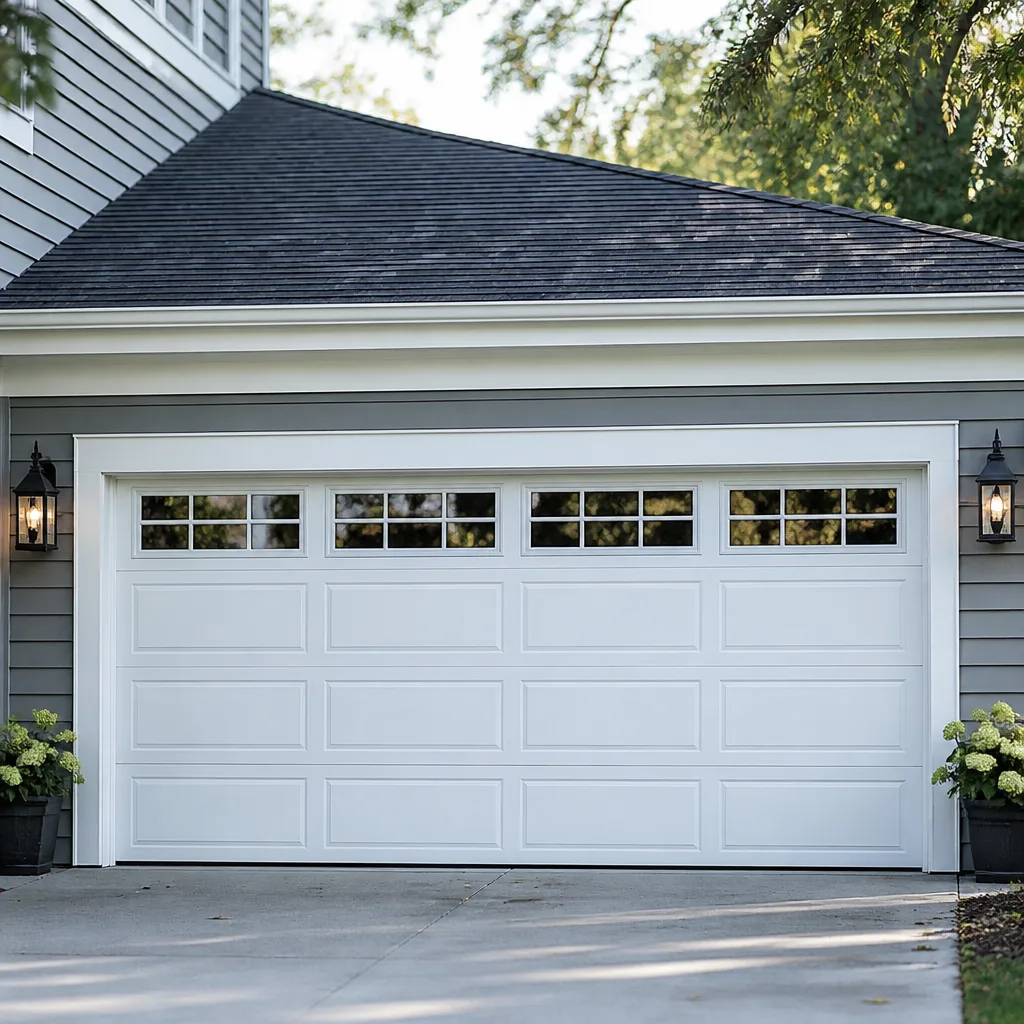
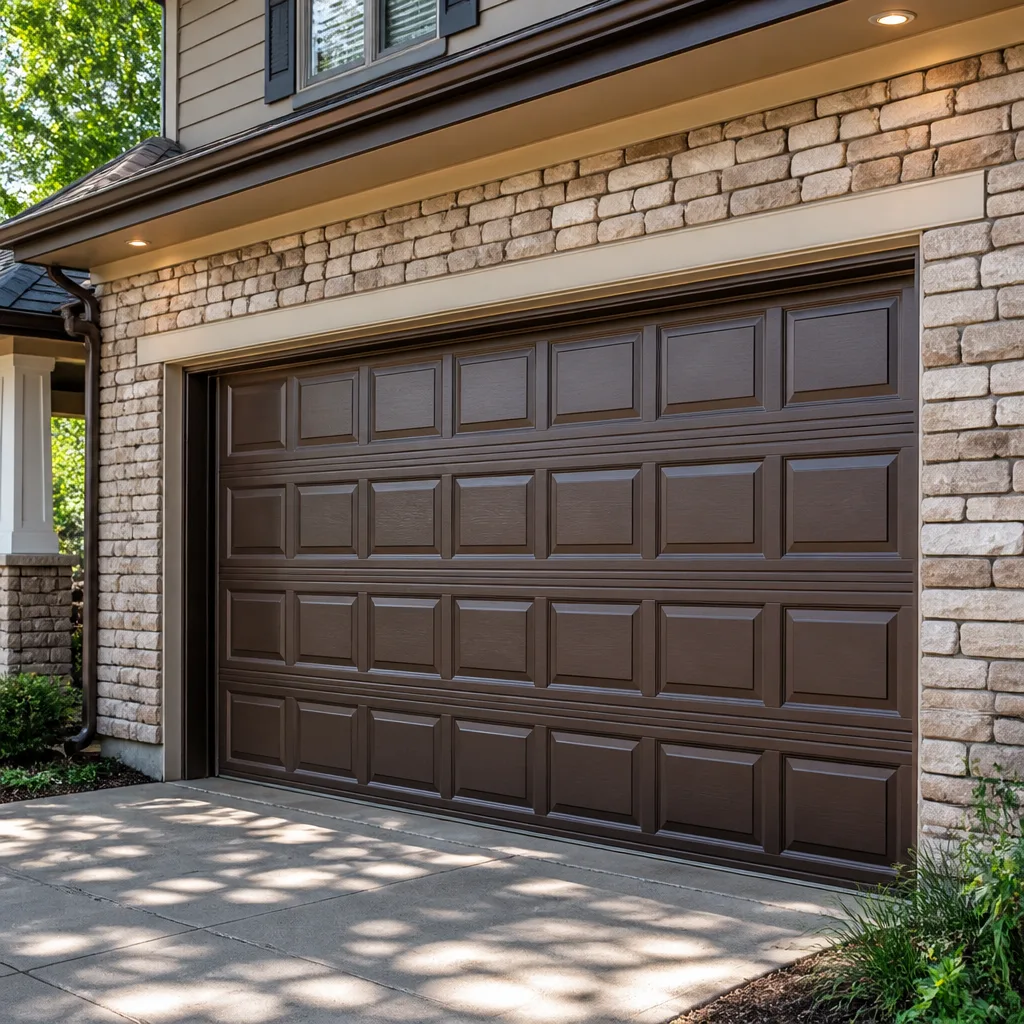 Raised-panel steel
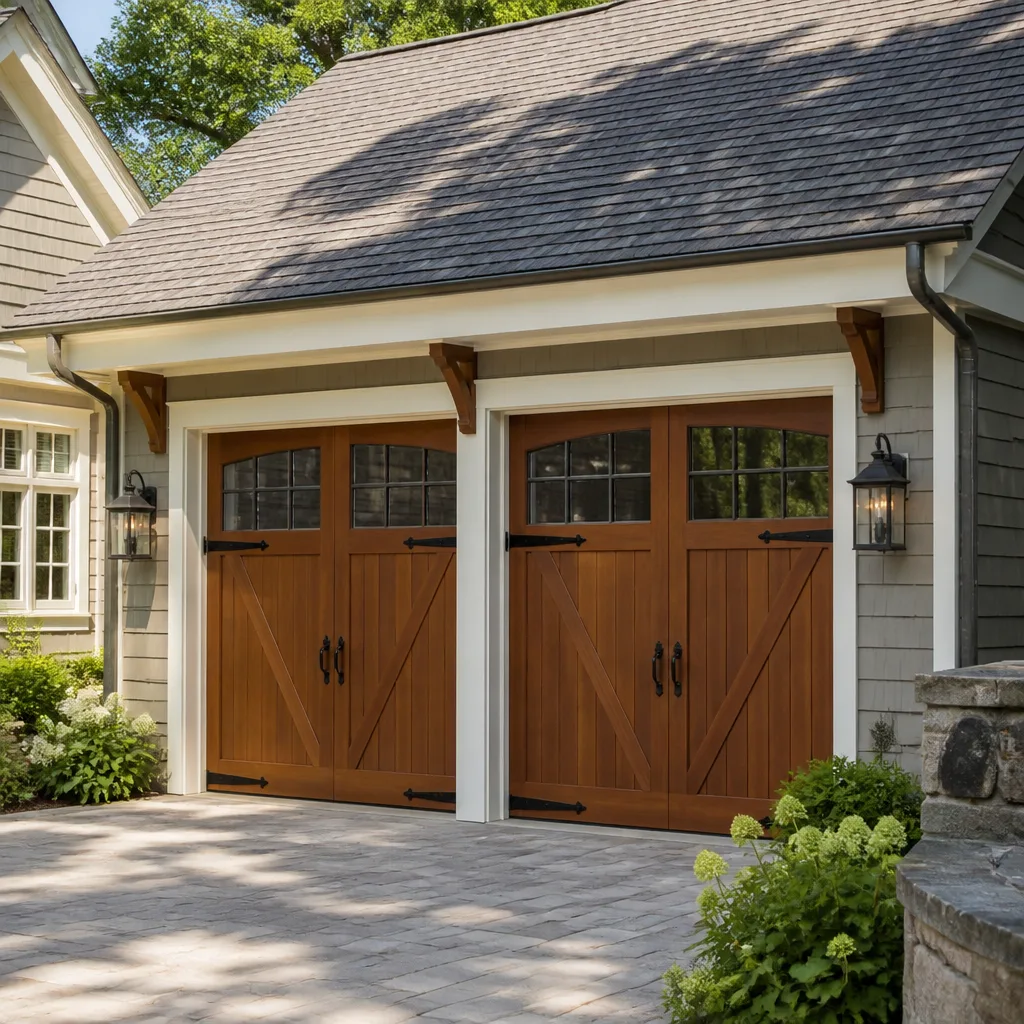 Carriage house
 Modern flush
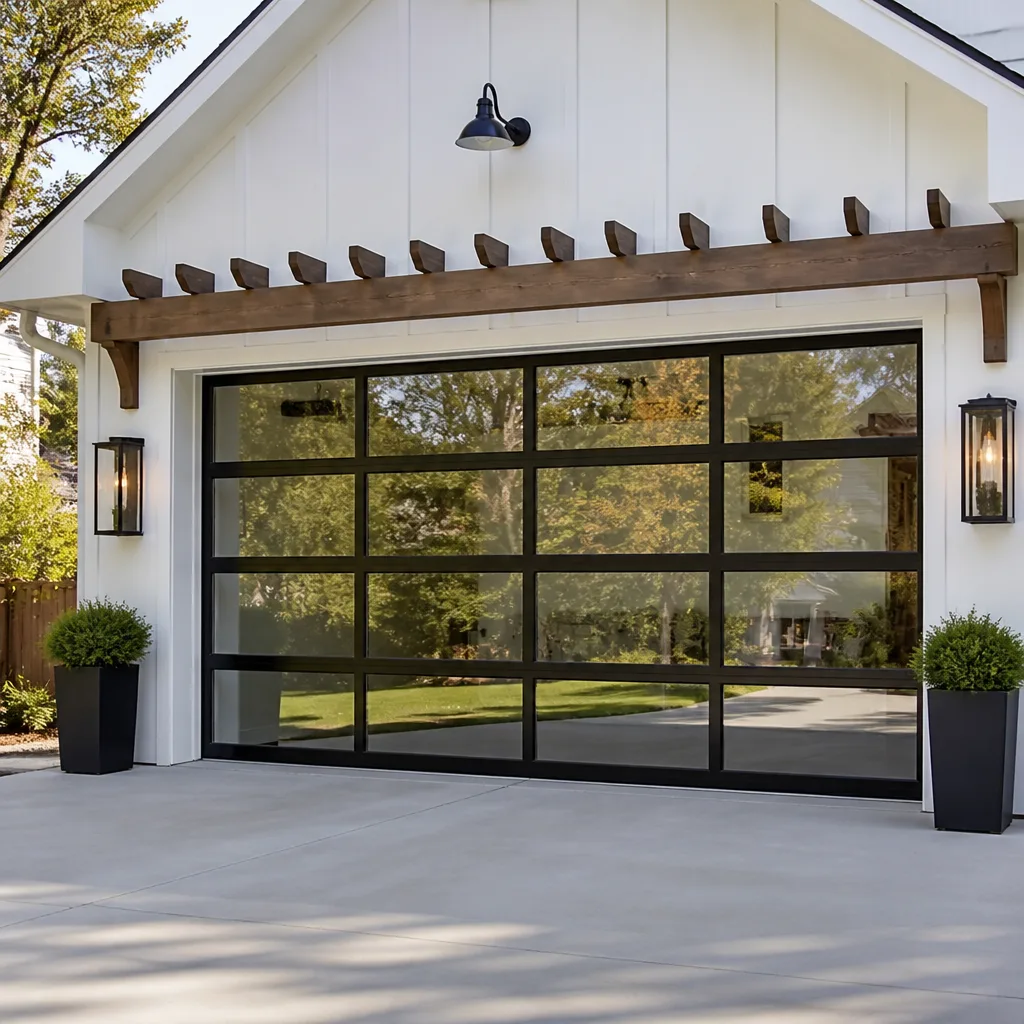 Full-view glass
 LiftMaster openers
 Chamberlain openers
Full 25-point door and opener safety check with every visit - springs, cables, rollers, tracks, and your LiftMaster or Chamberlain opener included
You get a price before we start. It does not change when the pro arrives.
Get your free estimateDIY vs Professional Garage Door: The Wheaton Homeowner’s Decision Guide
Most garage door advice splits the world into two buckets: call a pro for everything, or grab your tools and figure it out. That’s not how it actually works, and treating it that way costs Wheaton homeowners either money they didn’t need to spend or a trip to urgent care they didn’t see coming. The real question isn’t whether you’re handy enough. It’s whether the specific task in front of you carries injury or liability consequences severe enough to change the math. Some of this work is genuinely yours to do, and any technician who tells you otherwise is padding the invoice. Other parts of it can put your hand in a vice made of steel. This guide draws the line precisely, task by task, so you don’t pay for help you don’t need and don’t underestimate what you’re dealing with.
Quick Answer
Lubricating hinges and rollers, adjusting opener limit switches, replacing weather seals, and cleaning photo-eye sensors are safe for most Wheaton homeowners to handle themselves with basic tools and care. Spring work, cable replacement, and anything involving the torsion assembly or high-voltage opener wiring should go to a trained professional because the stored energy and injury risk make DIY categorically different from other home repairs. Everything else depends on the specific task, and this guide sorts it into three columns so you can decide with confidence rather than guesswork.
Styles & brands we work with
- Raised-panel steel
- Carriage house
- Modern flush
- Full-view glass
- LiftMaster openers
- Chamberlain openers
Table of Contents
- The Three-Column Test: Which Garage Door Tasks Are Actually DIY
- Why Torsion Springs Are Different From Everything Else
- Risk-Adjusted Cost: Professional Repair vs. DIY Gone Wrong
- Illinois Liability When Self-Installed Work Fails
- Tools Every Wheaton Homeowner Should Own for Garage Door Maintenance
- Opener Repair: Where DIY Ends and Electronics Begin
- Wheaton Climate, Housing, and Garage Door Wear
- Why the Brand on Your Door Changes the DIY Equation
The Three-Column Test: Which Garage Door Tasks Are Actually DIY
Here’s the framework we use when a homeowner calls and asks whether they should attempt a repair themselves. We sort every common garage door task into one of three columns, based purely on what happens if it goes wrong. Not on how hard it is. On what the failure mode looks like.
Column 1: Safe DIY
These are maintenance tasks that require no special training, carry no real injury risk, and don’t affect the structural integrity of the door system. If you own a socket set and a screwdriver, you can do all of these:
- Lubricating hinges, rollers, and tracks with a garage-door-specific lubricant
- Replacing the bottom weather seal or side seals
- Cleaning and realigning the photo-eye safety sensors
- Tightening loose bracket bolts and track bolts
- Adjusting the opener’s limit switches (the door travels too far or not far enough)
- Changing the opener remote battery and reprogramming remotes
- Wiping down and repainting a steel door panel
Column 2: DIY With Caution
These tasks are achievable for a careful homeowner but carry specific risks that need to be understood before you start. The caution isn’t “this is hard.” The caution is “here is exactly what can go wrong.”
- Track adjustment: A track bent back into alignment can seem fixed while the door runs unevenly and wears the rollers. The caution is that a track that looks straight isn’t necessarily square, and misalignment accelerates wear across the whole system.
- Replacing a single roller: Straightforward on most doors, but the door must be fully closed and the spring tension left alone. The caution is working on a door with any tension on the springs and thinking the roller is the only thing moving.
- Replacing an opener drive belt: Doable on many LiftMaster and Chamberlain units, but you need to follow the specific tension procedure for your model. The caution is that overtightening causes premature failure and a loose belt jumps the sprocket.
- Replacing a wall-mounted control panel or adding a keypad: Low risk electrically, but you’re working with low-voltage wire near a high-voltage opener. The caution is knowing which wire is which before you touch anything.
Column 3: Never DIY
These tasks involve stored mechanical energy or high-voltage wiring severe enough that a mistake can injure you badly or kill you. No amount of YouTube confidence changes the physics.
- Torsion spring replacement or adjustment: The spring stores enough energy to break a wrist or take out an eye. This is not an exaggeration. It’s the design.
- Extension spring replacement: Lower energy than torsion, still enough to cause serious injury when a spring lets go under load.
- Cable replacement: Cables are under tension from the springs. A cable that snaps free can whip with lethal force.
- Bottom bracket replacement: The bottom bracket is where the cable attaches and holds spring tension. Removing it without relieving tension first is one of the most dangerous mistakes in the trade.
- High-voltage opener wiring or new circuit installation: Anything past the low-voltage control wire belongs to a licensed electrician or a trained garage door technician.
- Full door replacement or panel replacement on a tensioned door: The door has to come down safely and go back up aligned. The weight and the springs make this a two-person minimum, trained-technician job.
Our technicians have up to 9 years of experience, and the spring and cable work is the part of the job that gets the most respect on every call. It’s also the part we handle as a dedicated specialty rather than an afterthought. If you’re looking at a task in that third column, our garage door spring repair team is the right call.
Why Torsion Springs Are Different From Everything Else
A torsion spring is a steel rod wound tight and held in place by a set of winding bars. When it’s under tension, it holds the entire weight of your garage door, which on a standard single-car door in Wheaton runs a few hundred pounds. On a double door, more. The spring does that work every time you open or close the door, and it stores that energy even when the door is sitting still. That’s the part most homeowners don’t think about.
When a torsion spring fails, all that stored energy releases at once. The spring doesn’t gently unwind. It snaps, and the two ends move fast enough that anything in their path gets hit hard. A winding bar that slips out of the spring while you’re turning it turns into a projectile. A hand near the spring cone gets caught between steel moving in opposite directions. This is why the injury statistics on garage door spring work are so lopsided compared to other home repair categories: the failure mode isn’t a cut or a bruise, it’s a fracture or worse.
The physics are also why this isn’t a “be careful and you’ll be fine” situation. A homeowner who does everything right can still get hurt by a spring that fails early or a bar that doesn’t seat fully. The margin for error is small, and the consequence of a mistake is severe.
Extension Springs vs. Torsion Springs
Extension springs run along the horizontal tracks and stretch rather than wind. They’re lower energy than torsion springs, but a broken extension spring can still cause serious injury, and on doors without a safety containment cable it can fly across the garage. If you’re not sure which type you have, look up: torsion springs are on the header above the door, extension springs run along the side tracks.
Either way, the classification doesn’t change. Both belong in the never-DIY column. We work on both, and we’d rather see you call than see you try to wind a torsion spring alone. When it has to work, that’s exactly the job for a trained technician.
Risk-Adjusted Cost: Professional Repair vs. DIY Gone Wrong
Here’s where the DIY debate usually goes wrong. The comparison isn’t “professional repair cost” vs. “zero.” It’s “professional repair cost” vs. “cost of a DIY attempt that works” plus “probability of a DIY attempt that doesn’t” multiplied by the cost of that failure. When you run the second half of that equation for spring work, the math stops being close.
An emergency room visit for a hand or wrist injury from a torsion spring starts in the four figures and climbs from there, and that’s before you count the door that’s now hanging inside your garage with bent panels and a track that needs replacement. A door that gets damaged during a failed DIY spring job often costs more to repair than the spring job would have cost in the first place, because now you’re paying for spring work plus panel or track replacement plus possibly a new opener if the door slammed down on it.
What Each Task Typically Costs in Wheaton
These are estimated ranges based on typical Wheaton-area garage door work. Your written estimate is what sets the final price, and we quote and agree on that price before any work starts. Here’s the comparison for the tasks in each column:
- Professional spring repair (one spring): typically $180 to $340 for one spring; a matched pair runs roughly twice that and is usually replaced together.
- Professional cable replacement: typically $150 to $300 depending on the door configuration.
- Professional roller replacement (full set): typically $150 to $250.
- Professional weather seal replacement: typically $120 to $220.
- ER visit for a hand injury (before door repair): starts in the four figures, often with follow-up care.
- Door damage from a failed DIY spring job: panel replacement and track realignment typically land in the $400 to $900 range on top of the spring repair you still need.
Run the numbers. The spring job costs less than the emergency room co-pay plus a damaged door. That’s the whole argument for professional spring work, and it doesn’t require you to be unhandy to see it. It just requires you to be honest about what a spring failure looks like.
Where DIY Genuinely Saves Money
The picture flips for the tasks in column one. Lubricating your hinges and rollers costs you the price of a can of lubricant and twenty minutes. A professional service call for lubrication is money you don’t need to spend, and we’ll tell you so. Replacing a weather seal yourself is a weekend task with a basic tool set, and the seal itself is inexpensive. Adjusting an opener limit switch takes ten minutes with the manual. Those are real DIY savings, and they’re worth taking.
The rule of thumb: if the task involves stored spring energy, high-voltage wiring, or the cables that hold the door’s weight, the risk-adjusted cost favors professional work. If it involves lubrication, seals, sensors, or programming, DIY wins.
Illinois Liability When Self-Installed Work Fails
This is the part of the DIY vs. professional decision that most homeowners in Wheaton never think about until it matters. If you install or repair a garage door component yourself and that work later fails and causes property damage or injury, your homeowner’s insurance may cover the damage but dispute the claim if the failure traces back to improper installation or repair. Illinois homeowner policies vary, so the exact answer depends on your carrier and your policy language. The common thread is that insurers ask how the work was done and by whom, and an unpermitted or improperly executed install is a complication you don’t want.
The liability angle cuts two ways. If a self-installed door or opener fails and damages a neighbor’s car or injures someone in your driveway, you’re the one who did the work, and that’s the first question anyone asks. If you hire a professional, the licensed and insured local pro we connect you with is licensed and insured as their state requires, and the responsibility for the work sits where it belongs.
There’s also the resale angle. A Wheaton home with a garage door installation that was done without the right permits can run into trouble at inspection when the buyer’s inspector asks for documentation. Most cities require a permit for garage door replacement, so ask your city’s building department whether your specific project needs one before you start. That’s not a way to scare you out of DIY. It’s the practical administrative side of the decision, and it’s worth knowing before you swing a hammer.
The safe move for anything in the never-DIY column is to have it done by a professional with the proper credentials. Our garage door repair work covers standard repairs, and if you’re ever unsure whether the work you’re considering falls into that liability-sensitive category, call us and we’ll tell you straight.
Tools Every Wheaton Homeowner Should Own for Garage Door Maintenance
You don’t need a full shop to keep a garage door running smoothly. You need a short list of specific tools that pay for themselves the first time you use them, and that stay useful for every subsequent maintenance task. Here’s what we recommend, with enough specificity that you can buy it once and use it for years.
The Core Tool Kit
- A garage-door-specific lubricant: Not WD-40, which is a solvent and will strip the lubricant off your rollers. Look for a lithium or silicone-based garage door lubricant in a spray can. One can lasts a season.
- A 3/8-inch drive socket set with SAE and metric sockets: garage door brackets, hinges, and track bolts use various hex sizes, and a full set covers all of them. A $30 to $50 set is enough for a homeowner.
- A set of nut drivers in the common sizes: for track bolts and hinge screws that are too small for a socket.
- A level and a tape measure: for checking track alignment and door height when replacing a seal or panel.
- A putty knife and a utility knife: for removing and trimming weather seals.
- Work gloves and safety glasses: not optional for any garage door work. Store them with the tools so you don’t have to hunt.
Tools Worth Buying for Opener Maintenance
If you have a LiftMaster or Chamberlain opener with a smart-home integration, a few more tools help: a small Phillips-head screwdriver for the control panel wiring, a multimeter for checking low-voltage connections, and a phone to photograph the wiring before you disconnect anything. That last one is the highest-value tool on the list. A photo of the wiring harness before you touch it saves you a call.
What you should not buy: winding bars, spring cones, or any tool marketed for do-it-yourself torsion spring work. Those belong in the hands of a trained technician, and buying them doesn’t change the physics. If you already own them, leave them in the box for the column-three tasks.
Opener Repair: Where DIY Ends and Electronics Begin
The opener is a different beast from the door itself. Door problems are mechanical. Opener problems are increasingly electronic, and the line between “I can fix this” and “I should call someone” moves depending on which side of the opener you’re working on.
What You Can Handle
- Reprogramming remotes and keypads
- Changing the opener’s battery backup (on units that have one)
- Adjusting the travel limits and force settings per the manual
- Cleaning and aligning the photo-eye sensors
- Pairing the opener with a smart-home hub or app
- Replacing a wall-mounted control panel
What Needs a Professional
- Motor replacement or drive gear failure
- Logic board failure (the opener runs partway and stops, or short-cycles)
- Replacing the drive belt or chain on a worn unit
- Any work on the high-voltage wiring or the opener’s power circuit
- Replacing an opener whose rail is bent or whose trolley has failed
Modern LiftMaster and Chamberlain systems pack a lot of electronics into a small housing, and a misdiagnosed logic board looks a lot like a misadjusted limit switch until you know what to look for. That’s the part of the job our garage door opener repair team handles regularly: the electronics, the smart-home integrations, and the diagnosis that separates a board from a switch. We work on the brand you already have.
Wheaton Climate, Housing, and Garage Door Wear
A garage door in Wheaton lives a harder life than a garage door in a mild climate. Wheaton’s winters bring repeated freeze-thaw cycles, which work on every moving part of the door system. Metal contracts in the cold and expands in the warm season. Lubricant thickens. Weather seals stiffen and crack. Springs fatigue faster when they’ve been cycling through temperature swings for years.
The spring life you can expect in Wheaton reflects that. A torsion spring that might last longer in a temperate climate cycles through more stress here, and the sound of a spring letting go is a familiar one in older Wheaton neighborhoods where the original doors and springs are still in place. If your door is making a sharp bang when it opens or closes, the spring is telling you something.
Housing Stock and Door Age
Wheaton has a mix of older homes with original garage doors and newer construction with more recent installations. Older doors often use extension springs or early torsion systems, and the parts are still available for most of them. Newer doors tend to have insulated steel or composite panels and modern openers with smart-home features. Both are serviceable, and both have their specific wear patterns. An older door’s tracks may be out of alignment from decades of settling, while a newer door’s opener is more likely to have electronic issues than mechanical ones.
The practical takeaway: the age and type of your door changes what maintenance it needs and how often. A door that’s been through many Wheaton winters is due for a full inspection of the springs, cables, and rollers at least once a year. Catching a worn spring before it fails is the difference between a scheduled repair and an emergency call on a Sunday.
Why the Brand on Your Door Changes the DIY Equation
Not every garage door brand is built the same way, and the brand on your door or opener determines what parts are available, what procedures apply, and where the DIY line sits for your specific equipment. We’ve worked on enough of them to know the differences matter.
Raynor and Amarr doors have their own panel and hardware specifications, and using the wrong replacement part can create a door that doesn’t seal or runs unevenly. Wayne Dalton systems often use proprietary hardware and spring configurations that require brand-specific knowledge. Craftsman openers have their own diagnostic codes and limit-switch procedures that don’t match other brands. If you’re doing DIY maintenance on a specific brand, look up the exact model number before you buy parts.
This is where our factory familiarity pays off. We work on LiftMaster, Chamberlain, Genie, Clopay, Amarr, Wayne Dalton, Craftsman, and Raynor equipment, and we diagnose each by its own specifications rather than assuming one brand’s procedure applies to another. If your door or opener is from one of those brands and you’re not sure whether the task you’re considering is safe to attempt, that’s exactly the call we take.
Common Mistakes to Avoid
- Buying winding bars for a DIY spring job. The tool is not the missing piece. The training is. A homeowner with winding bars and no experience is in more danger than one who never bought them.
- Lubricating with WD-40. It’s a solvent, not a lubricant, and it strips the protective coating off your rollers and hinges. Use a garage-door-specific lubricant instead.
- Assuming a bent track can be bent back. A track that’s out of alignment can look straight but run the door unevenly. Replacing the track is often the right fix, and it’s a professional job on a tensioned door.
- Working on a door with the springs under tension. The springs stay energized until they’re properly relieved. If you don’t know how to relieve them safely, you don’t know how to work on the door.
- Skipping the permit question on a replacement. Most cities in the Wheaton area require a permit for a door replacement, and assuming you don’t need one can cause problems at resale inspection. Ask your city’s building department before you order the door.
- Assuming homeowner’s insurance covers a self-installed failure. It may, but the claim can be disputed if the work was improperly done. The safest move is to have the installation done by a professional in the first place.
- Ignoring a sharp bang or a door that opens unevenly. Those are early signs of spring or cable wear. Catching them early keeps a small repair from becoming an emergency.
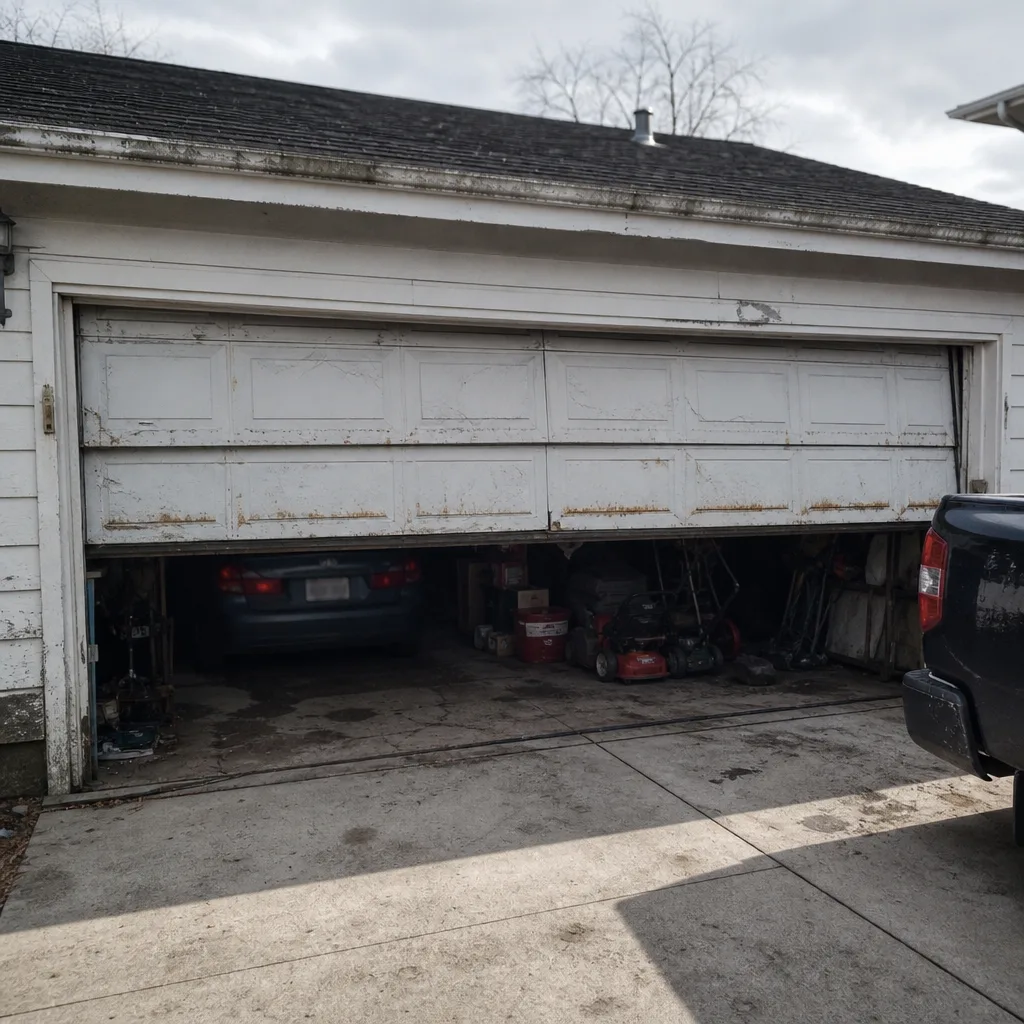
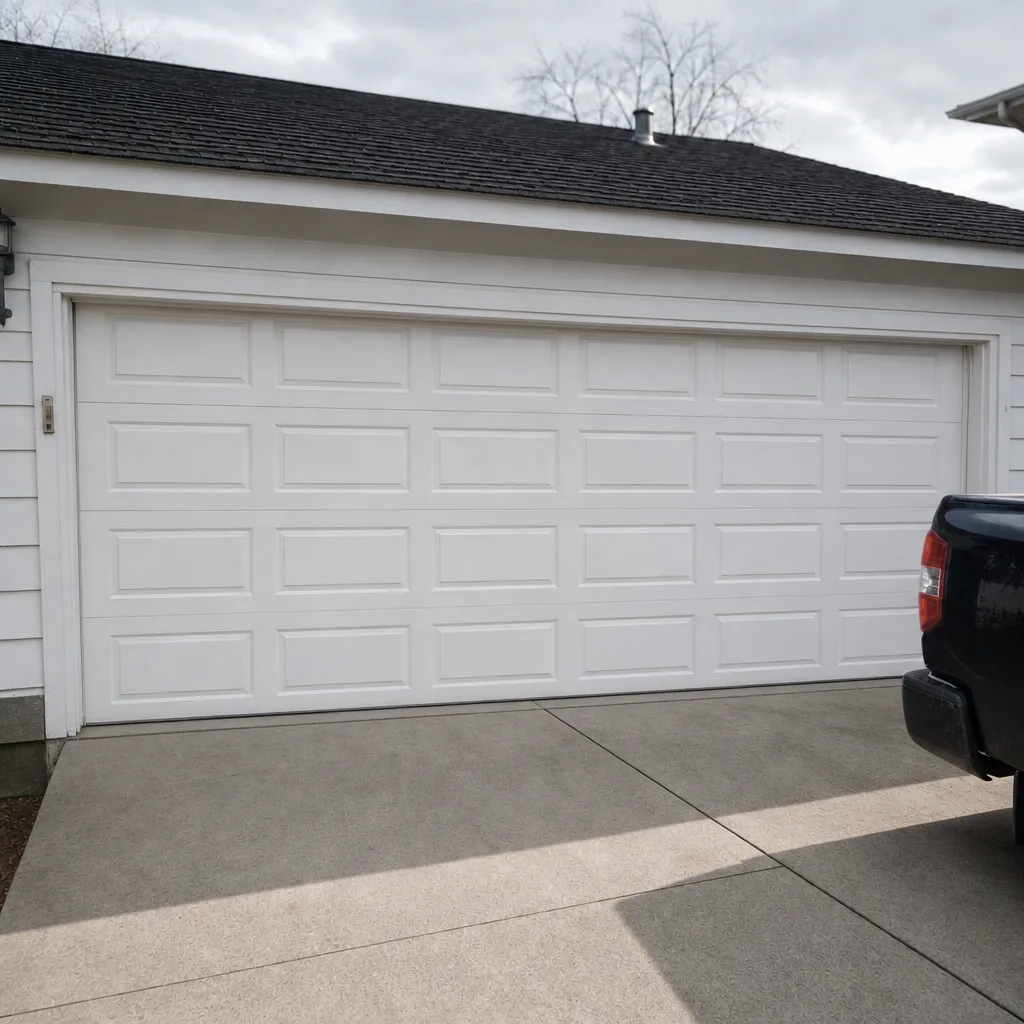
See the difference
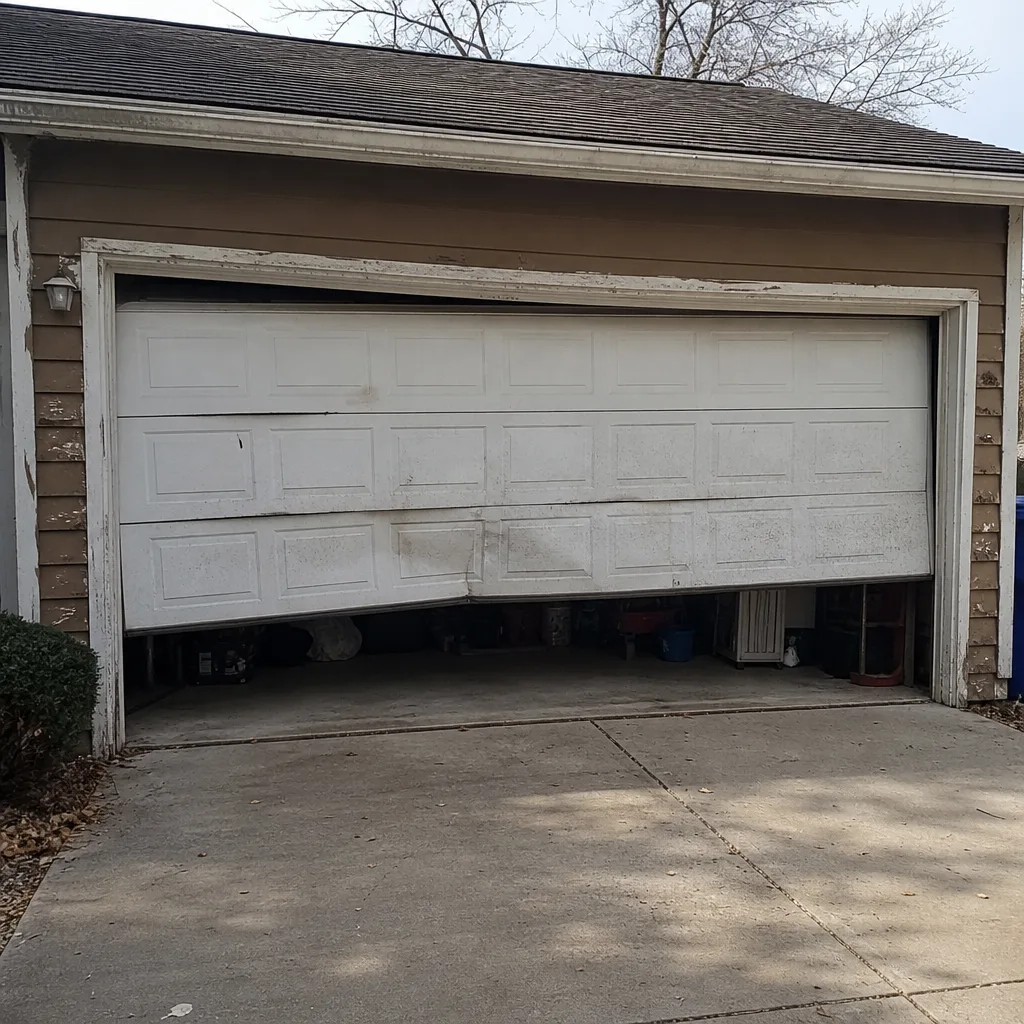 Before
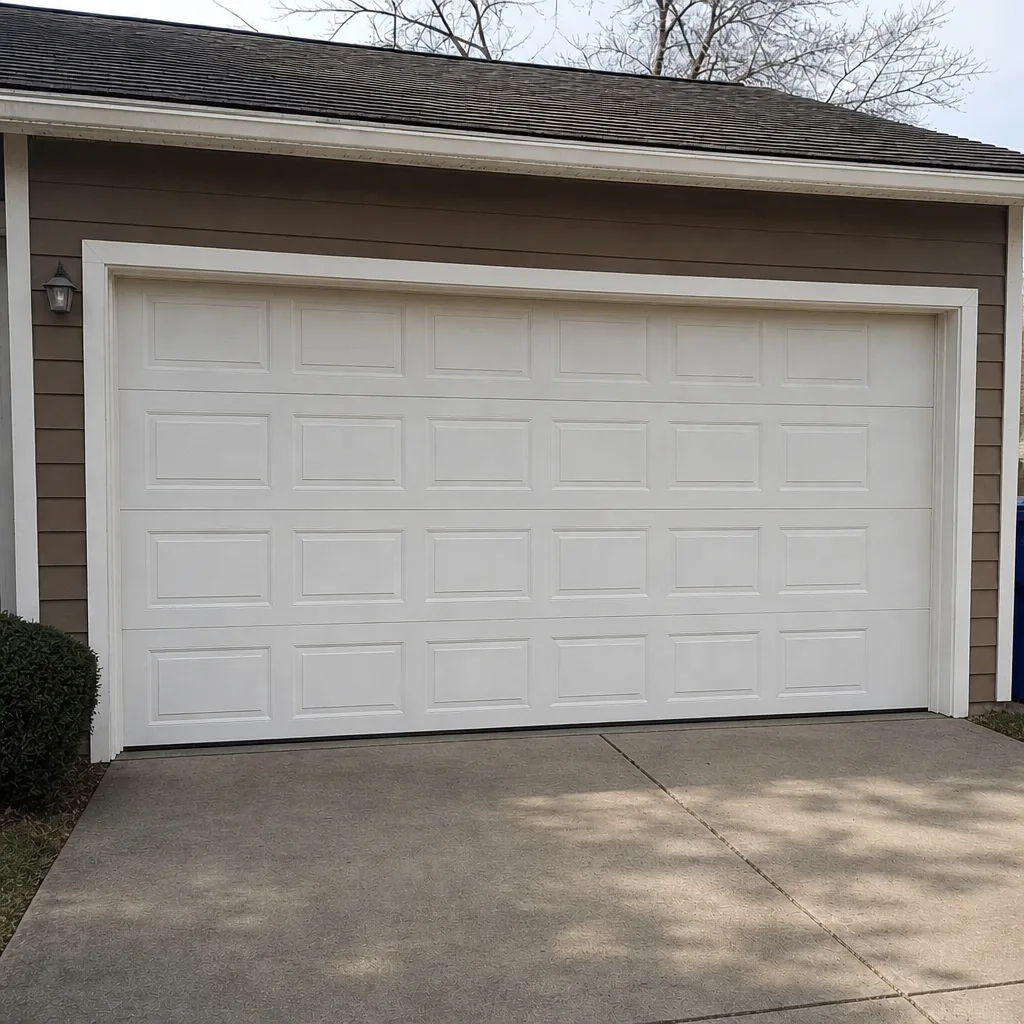 After
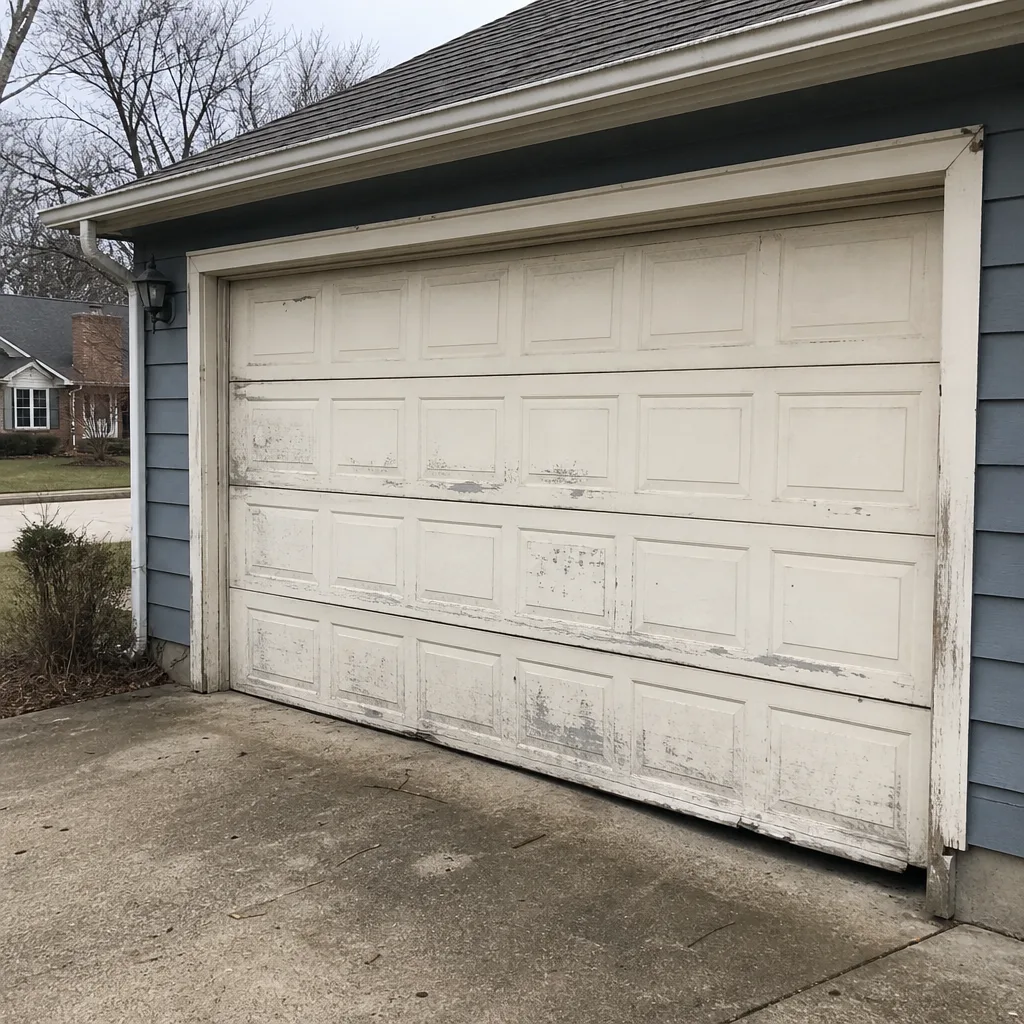 Before
 After
 Before
 After
When to Call a Professional
Call a professional for anything involving torsion or extension spring work, cable replacement, bottom bracket replacement, opener motor or logic board failure, high-voltage wiring, or a door that’s come off its track. Call us if your door won’t close evenly, makes a loud bang, or if you’re simply not sure whether the task in front of you is safe to attempt. We don’t mind a call that turns out to be a five-minute answer; we’d rather that than have you hurt yourself on a spring.
Our technicians have up to 9 years of experience, and we handle everything from a single worn roller to a full door installation for a single-car residential garage. Emergency garage door service is a core part of what we do, not an upsell. We’re open Sunday through Friday, 7am to 7pm, and closed Saturday.
Wheaton Garage Door Repair Pros offers free estimates in Wheaton. Call (844) 713-9631.
Frequently Asked Questions
No. Torsion and extension springs store enough energy to cause serious injury when they fail or release unexpectedly, and spring replacement is the most dangerous repair a garage door technician performs. This is a professional-only task regardless of how handy you are.
Professional spring repair typically costs $180 to $340 per spring, or roughly twice that for a matched pair, and a DIY attempt that goes wrong adds an emergency room visit and often door damage on top of the repair you still need. Call (844) 713-9631 for an exact quote, and estimates are free.
Lubricating hinges and rollers, replacing weather seals, cleaning photo-eye sensors, adjusting opener limit switches, tightening bracket bolts, and programming remotes are all safe for most homeowners. These tasks don’t involve stored spring energy or high-voltage wiring, so they’re genuinely yours to handle.
It depends on your policy and carrier. Illinois homeowner policies vary, and a claim can be disputed if the failure traces back to improper installation or repair. Check your policy language and consider having liability-sensitive work done by a professional.
Yes for most standard repairs, including spring and opener issues. We offer same-day service for repair work and emergency garage door service when waiting until Monday isn’t an option. We’re open Sunday through Friday, 7am to 7pm, and closed Saturday. Call (844) 713-9631 and we’ll get you a same-day solution.
Yes. We work on LiftMaster, Chamberlain, Genie, Clopay, Amarr, Wayne Dalton, Craftsman, and Raynor equipment, which covers the vast majority of doors and openers in Wheaton homes. Tell us your brand and model when you call and we’ll confirm before we arrive.
No. We quote and agree on the price before any work starts, and that written estimate is what sets the final price. What we see on inspection gets talked through with you first, and you decide before we begin.
The Bottom Line
The DIY vs. professional question for garage doors isn’t about whether you’re capable. It’s about which tasks carry injury or liability consequences severe enough that the risk-adjusted math favors a professional. Lubrication, seals, sensors, limit switches, and remote programming are yours to handle, and doing them yourself saves real money. Spring work, cable replacement, bottom bracket work, and high-voltage opener wiring belong to a trained professional because the stored energy and the consequences of failure change the calculus entirely. If you’re unsure which side of the line your project falls on, that’s the call to make. We’re always happy to talk it through. Call (844) 713-9631 for a free estimate and we’ll give you a straight answer.
Written by the team at Wheaton Garage Door Repair Pros.